In this post we pretend to summarize our experience in India, we will share some aspects that we think are important to consider mainly when travelling on a budget like we did. For that it is important to understand the budget and how it evolved/improved.
BUDGET
Our budget and expenses are ALWAYS for TWO people.
● Total budget for 11 months - $12000/10950€
● Monthly budget in India - $650/590€
● Daily budget in India - $20/18€
TOTAL EXPENSES
First Month - $847/773€ + $500 (transports scam)
Second Month - $715/652€
Third Month - $515/470€
Fourth Month - $370/338€
It is important to refer some of the reasons for the budget to decrease from one month to the other:
● In the first month everything is new and it's easy to get scammed like we did in Delhi.
● It takes some time to get used to the hygiene conditions of the restaurants so we ended up eating in more expensive ones.
● Bargaining is a skill that we developed by experience.
● Due to the transports scam, we had all out trains booked for the first month. Therefore, our stays in each place were short (3/4days). Short stays are usually more expensive because there is no time to think and to live as a local.
● We stopped booking our guesthouses/hotels online after realizing that all prices are negotiable.
● Booking our own transport tickets proved to be much cheaper.
● After a couple of months, the restaurant/guesthouse/transport conditions is not as important as it was before.
● As soon as we started volunteering, the budget dropped significantly as food and accommodation were provided by the hosts.
NORTH VS SOUTH OF INDIA
We feel that it is important to distinguish between north and south of India as our experience was completely different in each place.
● People in the South are much more relaxed than people in the North, they are always smiling and their behaviour is much less agressive.
● Religion is, in general, more present in the North.
● The South has more nature sightseeing and the North has more historical cities with forts and palaces.
● The North is very well connected by train. The South, due to the moutains, has less train stations but it is still well connected by bus.
TOURISTIC INDIA
India is a new world when it comes to the tasting and smelling food, busy and crowded streets, the constantly vibrating and painful hornes and dirty and smelly streets... Travelling in India is a fascinating experience for life where we are constantly put to test.
Having the possibility to be out of our confort zone is the most thrilling and wonderful experience that we all can have. Sometimes it is hard but at the end, the good is always much more than the bad. The greatest thing is how our mind gets used to a different reality and smoothly makes us feel confortable again.
Although, travelling for such a long time in India, requires to most of the travelers a place that we can call "home" at least for a few days to recharge batteries, to have time to relax and to chew our thoughts about all the amazing experiences.
Good places to relax from Crazy India:
Pushkar - very touristic guesthouses with western toilets, hippie clothes, western and Indian food and a lot of foreigners wandering around. Still a little sense of religion with a few temples and a holy lake.
Manali - Located in the Indian Himalaya, Manali is the place to be in perfect relaxation. Manali has a strong influence from Tibet and Nepal. Since many locals came from Tibet, it becomes easy to taste some Tibetan food and Tibetan clothes. Manali has a wide range of nature sports like trekking, hiking, rafting, camping, fishing, etc which requires a higher budget. But even for travellers with a short budget like us, Manali is still worth it. For a cheap price, it is easy to rent a scooter and explore the beautiful roads that cover the mountains. It is also possible to do very nice walks through pleasent parks and forests where it is easy to get lost.
Goa - Goa is no longer the party scene that used to be before. The police has stopped the famous beach parties during all year. Only in Christmas and New Year's eve there are some parties going on but unfortunately it gets really expensive for the Indian reality. Usually, by this time, travellers avoid to be in Goa. Only tourists that come for a short period and with some money on the wallets come to Goa in the high season. Anjuna remains the only place that has some parties during the year. Most of them happen in Curlies and in Shiva Valley, two bars in the Southern part of the beach.
In Goa, the main places to visit, are Arambol and Anjuna Beach where most of the travelers stop to enjoy the sun, to relax on the beach and to get some craziness. Arambol is, by far, better than Anjuna, it's more compact and everything is on a walking distance like vegetables, fruits, general stores, restaurants, bars, etc... and it is way cheaper than Anjuna in terms of accommodation. Although, Anjuna has the parties...
The reason why Goa is getting more expensive is that now a days, it became a popular vacation place for people from Russia and for the Indian middle class that has a very peculiar way to enjoy time at the beach, like screaming or staring and taking pictures of western female tourists in bikini.
The South of Goa is definitely more relaxed than the north, in the South there are not that much Indian tourists. Also, the landscape and beaches are by far much more beautiful than the beaches in the North.
Gokarna - Gokarna is the hippiest place in India. Really cheap when compared to Goa in terms of accommodation. The vibe is really good with Kuddle and Om Beach leading the preferences to stay. There are two more beaches, Half Moon and Paradise Beach, where it is possible to feel the wildest feeling of being on the beach. No restaurants or accommodation around, the way to get there is by boat or a beautiful walk on the rocks and through the wild forest around that on a tiny path gets us there.
TRANSPORTS
TRAIN
India has a very big railroad system that actually work very well. The train was our favourite way to move from one place to the other.
Initially we got scammed in Delhi by one "travel agency" so we ended up paying three or four times the price of the 7 tickets that we bought to travel through the Rajasthan. After realizing that, we learned how to book tickets online. We had to create an account in IRCTC and in 'makemytrip.com' (those accounts are linked), since we started to buy our tickets we tried several classes:
2AC - two beds/birth on top of each other, offers bedding sheets plus pillow and sometimes has a courtin. Confortable but expensive. It had air condition but it gets cold so you end up covering yourself.
3AC - Same as 2AC but three beds on the top of each other instead of two. Cheaper than 2AC but still expensive.
Sleeper - by far the best option to travel in India. It is the same as 3AC but without AC and more than half the price. It does not offer bedding sheets and pillow, and sometimes it gets cold at night, it is better to have a fleece or a sleeping sack.
General Class - the cheapest and craziest way to travel in India. There are no births available only hard seats where most of the times there are 4 or 5 people seated on a seat for 3. Usually people travel on this class without carrying a ticket, so there are always people sleeping on the luggage space above the seats and on the floor all over the carriage. You might have some unwanted company like little cockroaches wandering around and be prepared for a lot of eyes pointing at you as you might be the only westerner in the carriage.
Links to book trains:
- www.makemytrip.com
- www.irctc.com
BUS
Private bus AC Sleeper - Expensive and not worth the price. It has double and single births. We travelled in one or two of this class but imidietely switched to non AC or government bus. In long journeys, the bus has several stops, some for toilet necessities and also to get you to expensive restaurants for dinner.
Private bus Non AC Sleeper - more affordable and confortable enough in case there is no train. The stops are made in cheaper restaurants.
Private bus Non AC Semi-sleeper - tipical bus with reclining seats cheaper than the non AC sleeper bus. Nice choice for short journeys (3 to 7 hours).
Government bus (KSRTC) - we used these buses in the south of India. The buses are very very basic and old, seats are hard and do not recline, forget thinking about space for legs, though it is the cheapest buses for travelling and takes you to the point. Good for those o travel with short budgets. Sometimes it is not possible to book online, first come first served.
Links to book buses:
- www.makemytrip.com and www.redbus.in - Nice to check timetables for private buses but it is impossible to book with a foreign visa card. Ask in the guesthouse if they can book for you in order to avoid travel agencies fees.
- www.krstc.com - possible to book with foreign visa card.
GETTING AROUND
With time we learned how to negociate tuk tuk prices but even though we avoided it. In general, cycle rickshaws are cheaper but whenever we can we use city buses or metro(Delhi).
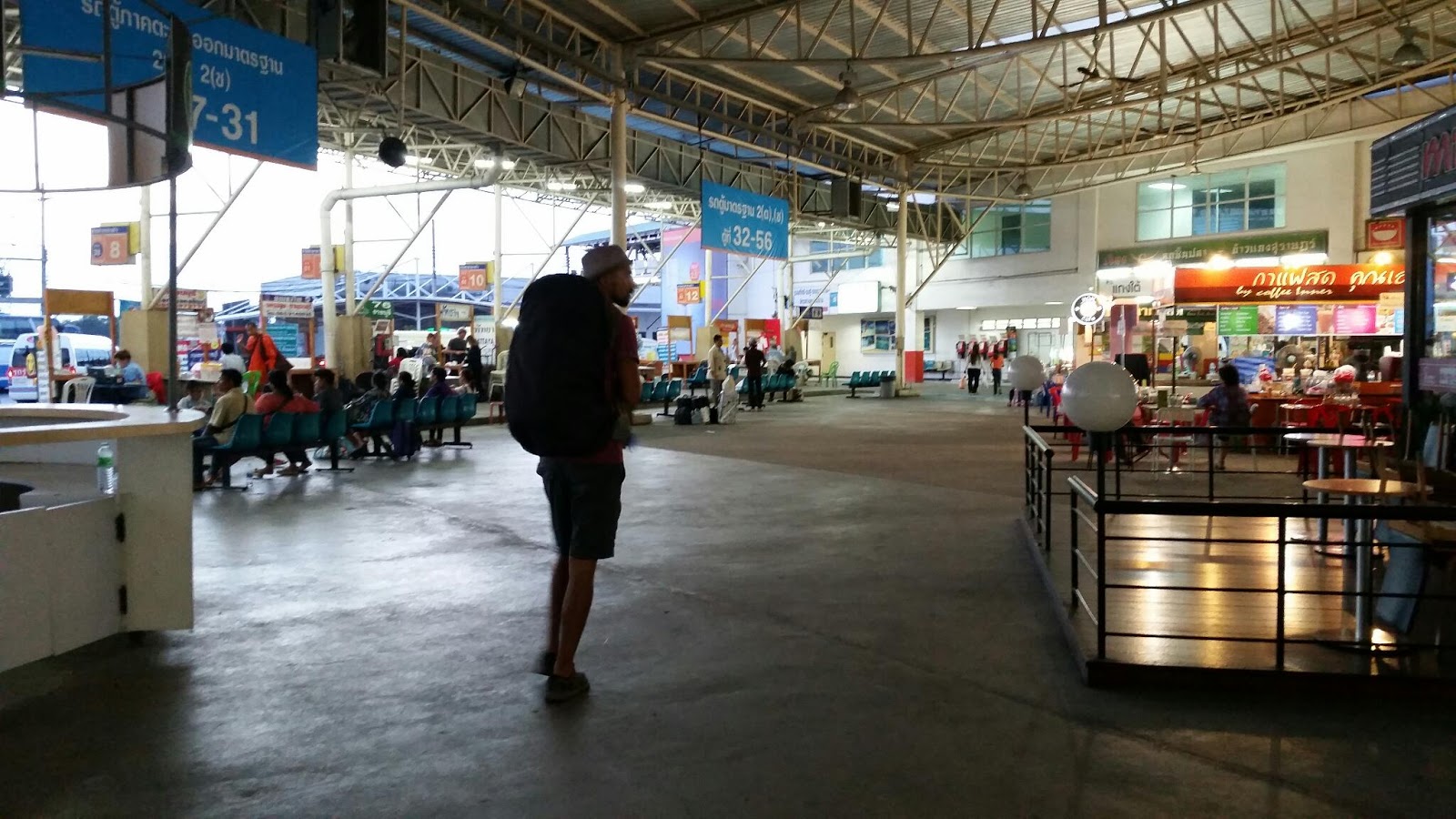
Walking carrying our backpacks is also part of the fun.
SHOPPING
India is well known by its colorful and smelly markets. It is very easy to get amazed by the cheap prices as soon as we are in India. Throughout our journey in India, we stayed in some places where we should have bought more stuff but we always thought if we could find cheaper in our next stop. Also, travelling for a year with a small backpack makes us think a lot about what to buy because weight and space is defenetly to consider.
Based on what we experienced, Pushkar and Jaipur are the best places to buy cheap things. They are very different from each other. Pushkar is more touristic and smaller than Jaipur. Both places have factories that provide most of the shops in india. For example, in Goa everything comes from Pushkar.
Pushkar has good quality and cheap silver plus all the kind of clothes, bags, sarongs, funky stuff, etc... all targeted to the western and hippie style.
Jaipur is full of Indian style fabrics like Sariees, carpets, scarfs, shoes, etc.
If you plan to buy leather items, Jaisalmer is defenetly a place to visit.
FOOD
India is very well known about the food. It is something that everybody talks about but sometimes, there are some concerns regarding the spicy dishes that might upset our western stomachs. We came to India very well prepared for any type of problem our stomachs could have but fortunately we didn't have to use any of the medicines.
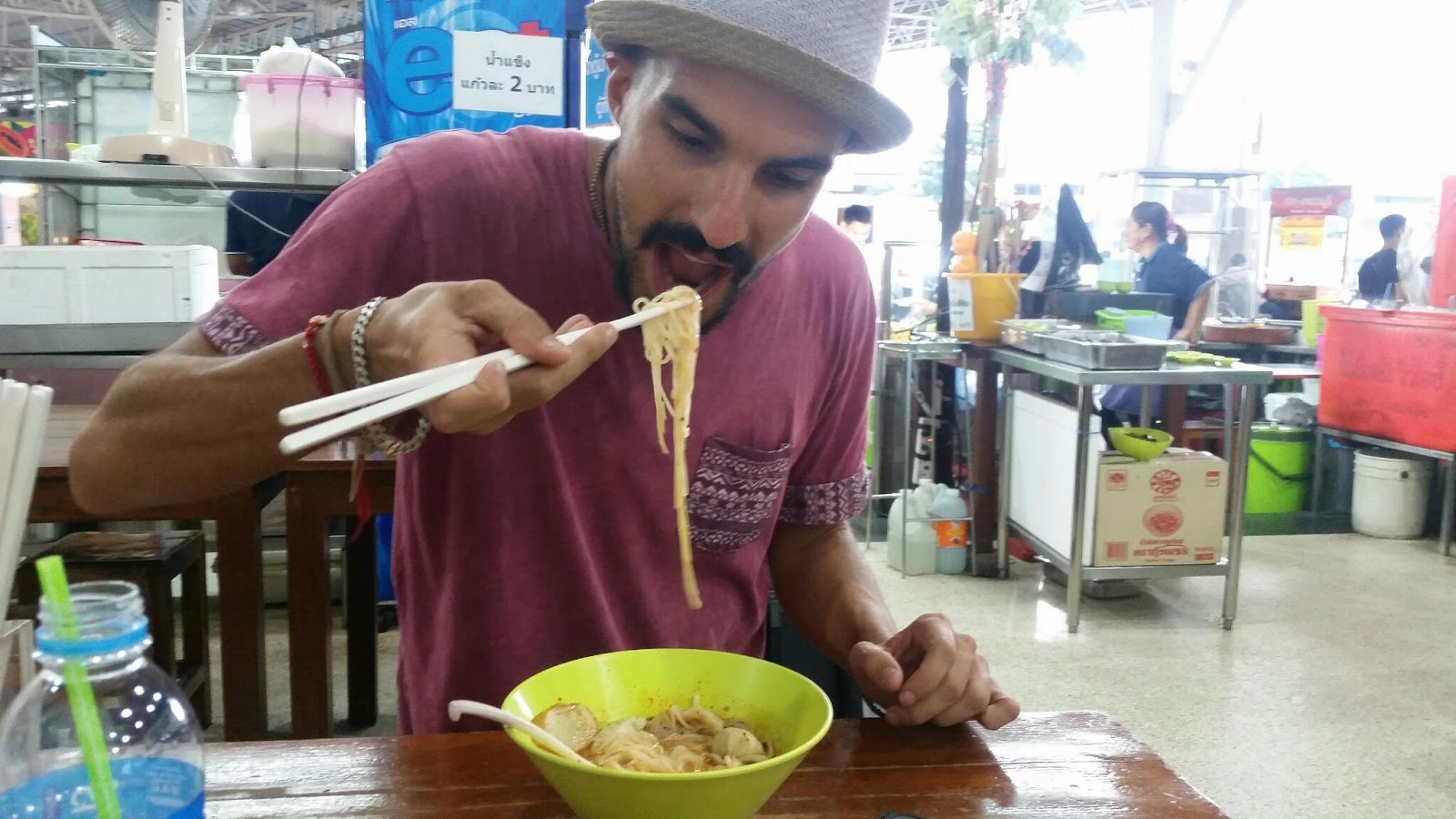
We went to all types of restaurants and street food without thinking twice and we never ordered "not spicy"... at the beginning, a simple samosa would help us to go to the toilet but nothing major... with time our mouths and stomachs got totally used to the new flavors and now we even like spicy.
Food is in general very tasty and the colors are very attractive, we noticed that in the south there is much more fried food than in the north but menus are big and there is always an option. Sometimes, in cheaper restaurants there is no menu.. those restaurants usually serve meals that consist in rice, dal (lentils) and some vegetables.
Some of our favorite options are:
- Masala Chai
- Masala Dosa
- Malai Kofta
- Paneer Butter Masala
- Chana Masala
- Palak Paneer
- Chapati (usually Naan is expensive for our budget)
- Fish/egg curry
- Onion Pakora
- Chutney sauce
- Stuffed Aubergine/tomato
RELIGION
We know that religion is very sensitive subject, we don't intent at all to disrespect anyone. What we are writing is based on situations that we lived and we are pretty sure that others might had totally different experiences.
We visited Hindu temples, Sikh temples, Catholic churches and holy lakes and cities. Usually when a person visits a religious site there is always a special energy in the air even for people that don't follow that religion. That actually happened when we visited the Sikh temples and the Catholic churches. Unfortunately, we never felt that energy when visiting an Hindu temple. We never felt welcomed and people always tried to rip us off. There are even temples with rooms where we could not get in just because we were westerns or not hindu. On the other side, when we visited a Sikh Temple we felt welcomed and that the temple was open to everybody. Actually, Sikh temples offer food and shelter to everybody it is just a matter of showing up. We went in the middle of the afternoon so they offered us a sweet but we could have gone by dinner time and we would have eaten for free with people from all sorts of religion. People were nice to us and we definitely felt peace.
From all the places we visited, these are the most religious ones:
- Varanasi
- Tiruvannamalai
- Madurai
- Pushkar (be aware of scams around the lake)
SAFETY
Usually when people travel to poor countries they always think it will be dangerous and that it is unsafe. That is definitely a wrong concept... During all this time in India there was not a single moment where we felt unsafe. In the beginning we felt a little bit uncomfortable in some places but that is only our mind messing us up... our mind is not used to see people in such poor conditions and immediately associates it to danger. But with time, we understood that those people would never do anything to us, they are just people that are in the street and they simply live in different conditions.
We believe that people would never steal us and there is one strong reason behind... Karma and religion. People believe that they were born in a low cast/poor because they did something bad in a previous life. Therefore, they would never do anything bad in this life in order to reborn in a better position in the future.
Based on conversations with other travellers, we noticed that girls travelling alone should be a little bit more careful. Some indian guys look at western girls with bad eyes and sometimes the situation can get out of control. Just avoid being in dark streets and isolated places alone.
"INDIA IS ONE OF THE HARDEST PLACES TO TRAVEL." WAS IT HARD?
Before planing this trip we were having a very confortable life. Although, we felt that there is much more in the world that we wanted to discover, to see, to live and to learn from it. We thought that India would be a nice choice to put ourselves out of our confort zone.
When someone plans to travel in India, the expectation is not that everything will be smooth, easy, clean and perfect. Usually only people that are looking for adventures and to get out of their confort zones come to India, so we were actual "looking for"/expecting some hard moments.
Hard doesn't necessarily means bad, there is always something great beyond the hardest experiences. Like the sun that shines brighter when seen from the top of a mountain, but of course climbing the mountain can be hard.
We learned through India what 'hard' means, with all the episodes and experiences that we had to takeover, like travelling in General Class in trains, sleeping with rats and cockroaches in our room, having shower with a bucket, Indian style toilets, travelling in trains and buses for more than 15hours, being chased by tuk tuk drivers starving for money, walking on the dirtiest streets that we have ever seen and eating always what is cheap on the menu.
We now know that what can be hard for a moment can become a lesson for life.
There was only one moment, at the beginning, that we felt like giving up and that maybe traveling in India was not a good choice but that happened on our first night after leaving the airport and reaching the hotel around midnight, when the hotel seemed to be located in the worst place that we had ever seen, dirty, dangerous and full of homeless people sleeping on the floor. Of course that happened because we were still too conected to our confort zone. After that night our mind started to change and step by step it adapted itself to at diferent reality.
Yes, we still see the garbage and the homeless people in the streets, we are still aproached by the tuk tuk drivers as soon as we step into the street, while writing this post we just killed 5 or 6 cockroaches that were in our room but it simply does not affect us the way it did before.
Yes, sometimes it was hard but it was much more rewarding than hard and we are sure that we learned a lot with all those things we saw and experienced. Things that will make our future much easier...
For sure we leave India stronger and knowing better what we are capable of.
No doubt that there are always the easiest and the hardest ways in life, but the greatest and most rewarding achievements come from the hardest ones.
Thank you India for all this amazing experiences, we will miss you...
Love
Kika&Pedro